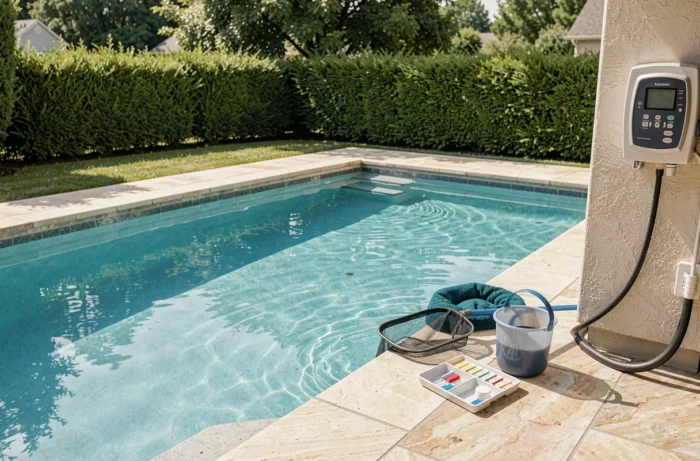
A saltwater pool produces its own chlorine through electrolysis, giving the impression of an autonomous and reliable treatment. However, green water regularly appears in these pools, often because chlorine production depends on parameters that the electrolyzer alone cannot control: water temperature, hardness, pH, and filtration duration. The five points that follow target the most common technical causes of greening and the concrete actions to neutralize them.
1. Monitor the electrolyzer’s cutoff temperature
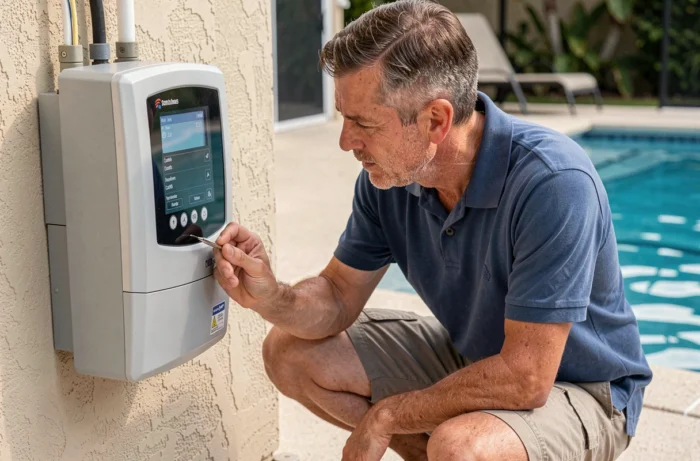
Several technical manuals remind us that below 10 to 15 °C, the electrolysis cell stops producing chlorine or operates in degraded mode. This threshold is rarely prominently displayed on the device, and many owners restart their pool in spring thinking that the electrolyzer is working normally.
The pool then remains without active disinfectant for several days, sometimes more than a week if the nights are cool. Microscopic algae take advantage of this sanitary void to colonize the walls and the bottom before the water even appears cloudy.
The solution is to check the water temperature before relying on electrolysis. As long as the thermometer has not crossed the threshold indicated by the cell manufacturer, a manual addition of chlorine (tablets or liquid) remains necessary to prevent green water in a saltwater pool right after coming out of winterization.
2. Descale the electrolysis cell before it loses efficiency
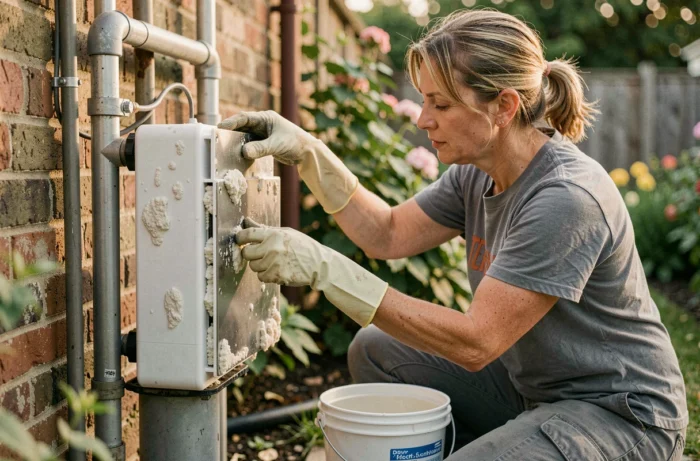
Limescale is a background factor often absent from consumer guides. Hard water gradually clogs the plates of the cell, reduces the contact surface, and decreases chlorine production without triggering any visible alert. The owner sees an electrolyzer running, but the free chlorine level in the pool slowly drops to zero.
Feedback on specialized forums describes exactly this scenario: free chlorine at zero for several days despite a functioning electrolyzer. Limescale buildup was the cause in the majority of documented cases.
The frequency of descaling depends on the local water hardness. In limestone areas, a visual check of the cell every four to six weeks during the season prevents unpleasant surprises. A soak in an appropriate acidic solution (provided or recommended by the manufacturer) is usually sufficient to restore efficiency.
3. Adjust filtration duration during hot weather
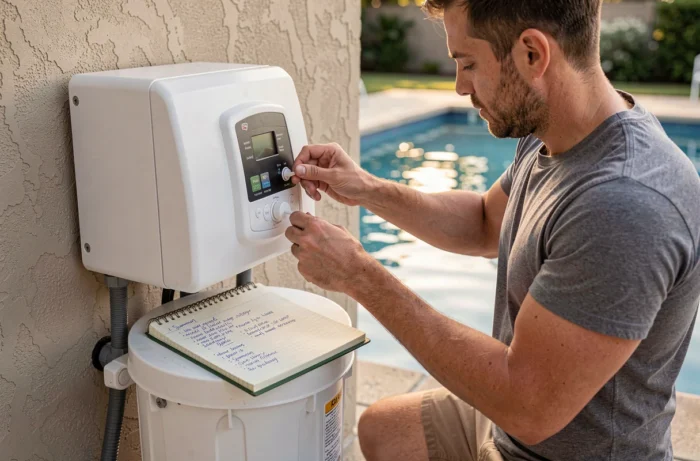
Electrolysis cannot do anything if the water is not circulating. The cell produces chlorine only when the pump is running. In the height of summer, with water temperatures exceeding normal thresholds, filtration must run much longer than in mid-season, sometimes almost continuously according to recent field reports.
The classic rule (divide the temperature by two to get the number of hours of filtration) becomes insufficient when the heat settles in for the long term. Algae multiply exponentially beyond a certain thermal threshold, and a few hours less of filtration can be enough to trigger greening.
- Schedule filtration during the hottest hours of the day, when algal proliferation is fastest
- Check that the actual flow rate matches the nominal flow rate: a clogged filter reduces circulation and thus chlorine production
- Add an additional night cycle during heatwaves, even if the nighttime temperature remains high
4. Check pH twice a week instead of once
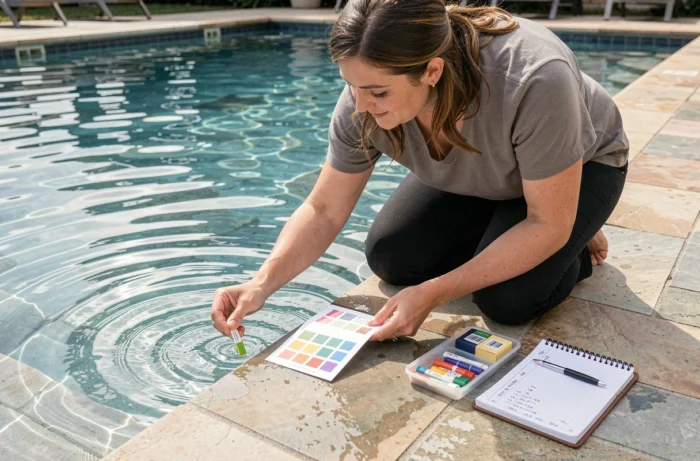
Salt electrolysis has a chemical peculiarity that traditional treatments do not have to the same degree: it tends to raise the pH of the water. A pH that drifts above 7.4 significantly reduces the disinfecting power of the chlorine produced. The result: the electrolyzer generates chlorine, but this chlorine loses its effectiveness against algae if the pH is too high.
Two measurements per week with strips or an electronic tester allow for detecting a drift before it reaches a critical threshold. The pH corrector (pH-Minus) should be dosed gradually, never all at once, to avoid a rebound effect.
Recent electrolyzers sometimes include automatic pH regulation. If not, an external pH regulator remains the most cost-effective investment to secure a saltwater pool. Without pH control, all other precautions lose some of their effectiveness.
5. Adjust chlorine production when the pool is covered
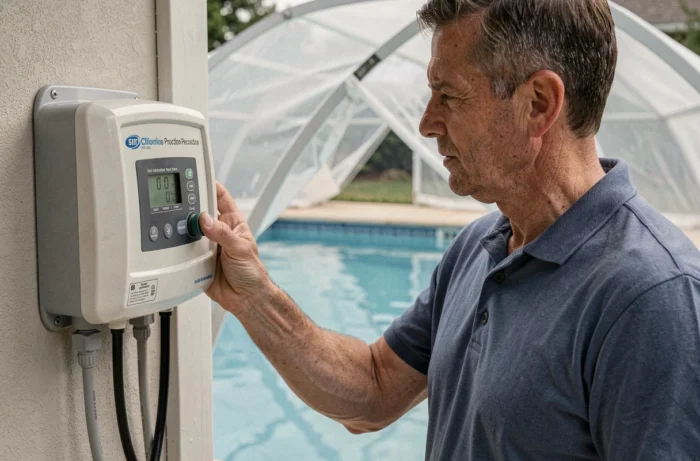
A roller shutter or bubble cover profoundly alters the chemical balance of the pool. Covered water no longer undergoes chlorine degradation by UV, which means that the usual chlorine production can become excessive under cover. The excess chlorine destabilizes the pH and accelerates cell wear.
Recent product sheets highlight electrolyzers capable of automatically stopping production under a cover or tarp. On older models, manually reducing the production percentage is the only option. Leaving the electrolyzer at full power under cover, then finding it at full power when the pool is open, creates chemical variations that favor algae during transitions.
- Reduce chlorine production when the pool remains covered for more than a few hours at a time
- Measure the free chlorine level after each extended period under cover before increasing production
- Brush the walls after removing the cover: shaded areas are the first to be colonized by micro-algae
The greening of a saltwater pool rarely results from a single failure. It is the combination of a drifting pH, a scaled cell, and insufficient filtration that opens the door to algae. Each parameter compensates for the weaknesses of the others, provided that they are checked regularly and not entirely delegated to the automation of the electrolyzer.