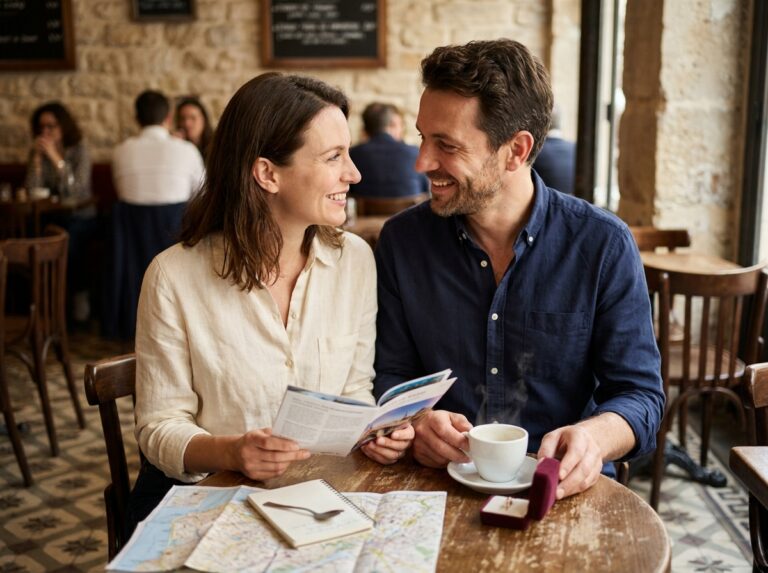
Searching for “what to do when you’re bored” returns lists of fifty activities where cleaning coexists with meditation and origami. The problem is not the lack of ideas, but the absence of a filter. Occupying your free time satisfactorily first requires assessing the available energy before choosing an activity. This article offers a simple framework to sort original entertainment ideas according to your current state.
Activities classified by energy level: comparison table
Most activity lists mix occupations that require sustained concentration with others that are perfectly passive. Grouping these activities by energy level allows you to quickly identify what matches your state.
| Energy Level | Type of Activity | Concrete Examples | Average Session Duration |
|---|---|---|---|
| Low (fatigue, end of the day) | Passive or contemplative | Podcast, virtual museum tour, listening to an opera online | 20 to 45 min |
| Moderate (available but not motivated) | Light manual or social | Board games, embroidery, bullet journal, sorting photo memories | 30 min to 1 h 30 |
| High (need to move or create) | Physical, creative, or immersive | Urban micro-adventure, food art workshop, escape game with friends, photo challenge | 1 h to 3 h |
This categorization is not scientific. It is based on a practical observation: an activity chosen at the wrong energy level generates frustration, not pleasure. Starting an escape game after an exhausting day means giving up after twenty minutes. Listening to a podcast when overflowing with energy leads to tuning out after five.
Exploring leisure activities on La Règle du Je gives an idea of the diversity of games available for every mood, from calm to competitive.
Micro-adventures and short challenges: occupy your free time without planning
The concept of micro-adventure is gaining traction in searches related to free time. The principle: transform an ordinary time slot into a short but intentional experience. Change your route home, photograph an unfamiliar neighborhood, visit a place within an hour’s transport.
The micro-adventure requires neither budget nor preparation. This distinguishes it from classic activities listed in vacation guides. It works particularly well when energy is moderate to high, as it involves stepping out of your routine without having to organize an entire weekend.
Three formats of micro-adventures suitable for the city
- Themed photo walk: choose a subject (doors, reflections, old signs) and walk for an hour, photographing only that theme. The constrained setting stimulates attention and produces concrete visual memories.
- The discovery meal: cook a dish from a cuisine you have never tried, following a video tutorial. Food art, which involves caring for presentation as much as taste, adds a creative dimension to the exercise.
- The “yes” challenge for half a day: accept the first activity proposal that comes up (invitation, local event, unusual market). The constraint of saying yes eliminates the deliberation phase that often kills motivation.
These formats share a common trait: they last between one and three hours, cost almost nothing, and produce a memory distinct from the everyday.
Choosing an activity based on your real energy: the method in two questions
Rather than scrolling through a list of fifty suggestions, two questions are enough to filter relevant options.
First question: do I want to produce something or receive something? Producing includes cooking, DIY, writing, drawing, playing a strategy game. Receiving includes watching, listening, reading, wandering aimlessly. This distinction eliminates half of the activities in a few seconds.
Second question: do I want to be alone or with someone? The answer further narrows the field. A solo creative workshop does not serve the same purpose as a family board game or a team escape game.
Why long lists don’t work
A list of thirty activities without sorting criteria gives the illusion of choice. In practice, the reader scans the list, doesn’t latch onto anything specific, and ends up doing nothing. The problem is cognitive: too many simultaneous options lead to inaction.
The energy/mode (produce or receive) and context (alone or accompanied) grid reduces possibilities to four or five realistic options. That’s enough to decide in under a minute.
Creative hobbies and board games: two underestimated families of activities
Creative hobbies have seen a resurgence of interest in recent years. Embroidery, knitting, diamond painting, bullet journaling: these manual activities have a common point. They occupy the hands, reduce mental load, and produce a finished object. For a person with moderate energy who wants to “produce” without getting off the couch, this is the ideal format.
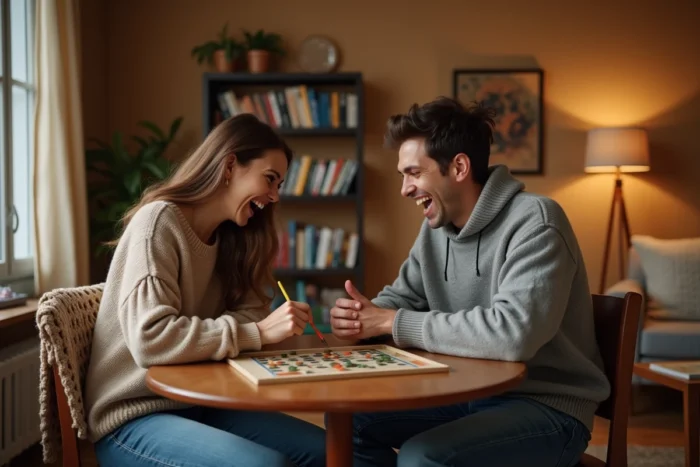
Board games, on the other hand, cover a broader spectrum. A cooperative game with family does not require the same energy as a competitive strategy game with friends. The choice of game depends as much on the desired atmosphere as on the number of players. A light party game suits a relaxed evening. A role-playing game or a tabletop escape game requires more sustained involvement.
Learning a new game rule constitutes an activity in itself: it engages memory, creates a moment of shared discovery, and transforms an ordinary evening into a group memory.
Useful skills to acquire during your free time
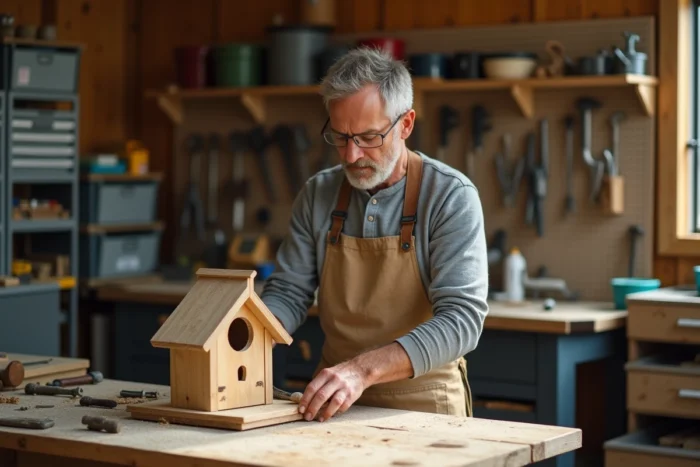
Several recent trends show that free time is also used to learn a concrete skill. Repairing a garment, following a woodworking tutorial, understanding the basics of video editing: these activities combine entertainment and practical utility.
The benefit of these skills is that they produce a visible result. Completing a repair or a small piece of furniture gives a sense of accomplishment that passive consumption (streaming, scrolling) does not provide. This type of activity corresponds to a high energy level and a “produce alone” mode.
Filtering your activity ideas by energy, mode, and social context does not guarantee that you will never be bored again. It reduces the time spent searching for what to do, leaving more minutes to actually do it.